your family stories
Canadian Immigration – Early 1900s
Some Canadian Immigration Statistics
Canada’s 1901 census put our population at 5,371,315. Fifty-seven percent of those counted claimed British origins.
In 1902 the greatest influx of immigrants in Canada’s history began and continued until the beginning of World War 1 in 1914.
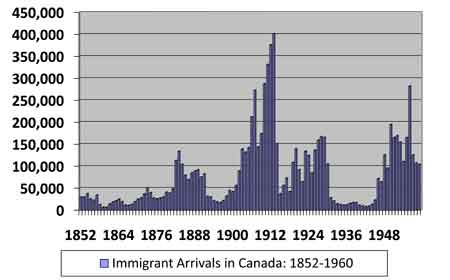
After an emigration office was established in Trafalgar House, Trafalgar Square, London, in 1903 the number of Britons enticed to emigrate to Canada increased to 42,198 (30% of the total) from 17,275 (just 19% of the total) the previous year.
The number of immigrants to Canada reached its peak in the years 1912 and 1913.(Knowles 2000)
| Year | Total Immigrants |
British Immigrants |
Percentage of total |
|---|---|---|---|
| 1912 | 375,756 | 147,619 | 39% |
| 1913 | 400,870 | 158,398 | 39% |
Between 1902 and 1914, of the approximately 2.85 million newcomers who arrived on Canadian soil, 1.18 million had English, Scottish, Irish, Welsh or other British roots.
These newcomers came from every British class from paupers to upper-class.
Reasons for Increased Immigration to Canada
To put our immigrants’ stories in a broader context, let’s look at immigration to Canada in the early years of the 1900s. What were some of the factors that motivated great numbers of people to immigrate to this country from not only Great Britain, but Europe as well?
The Report of the Royal Commission on Bilingualism and Biculturalism, Book IV (1970), cites the following factors as reasons for the increase of immigration in Canada in the early 1900s.
Factors in Europe contributing to emigration:
- Collapse of the social structure;
- Transformation of agriculture and industry;
- Precipitous increase in population.
Factors leading to increase in immigration in Canada, late 1890s to 1914:
- Yukon gold rush (1897-1899);
- Completion of the first continental railway (CPR 1885) and building of other lines;
- Closing of the American frontier;
- New developments in dry land farming;
- Canadian government’s first concentrated policy to promote immigration.
Canadian Immigration References
Return to Home Page
Clifford Sifton and Canada's Immigration Policy
Links to British Immigrants in Montreal pages:
FTC Disclosure - If you make a purchase by clicking a link or an ad on this site, I may receive a commission on the transaction at no extra cost to you.
What's New?


-
Colin Lovatt
Jan 30, 24 12:11 PM
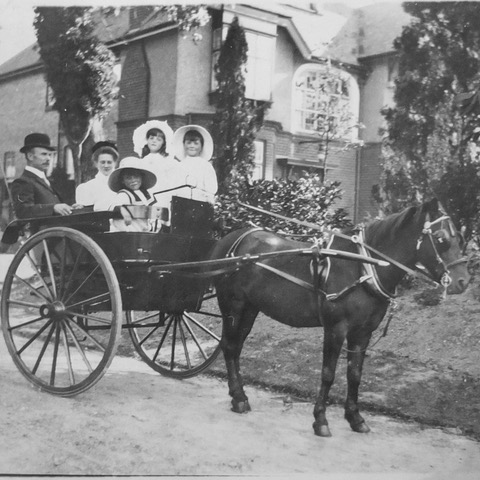 Colin Lovatt, the son of a prosperous family,came to Canada as a BICA Boy to work as an agricultural labourer. He returned to the UK.

Deborah Waddell is an independent member of the Evalogue.Life network of professional oral historians.